Toughened glass shopfronts
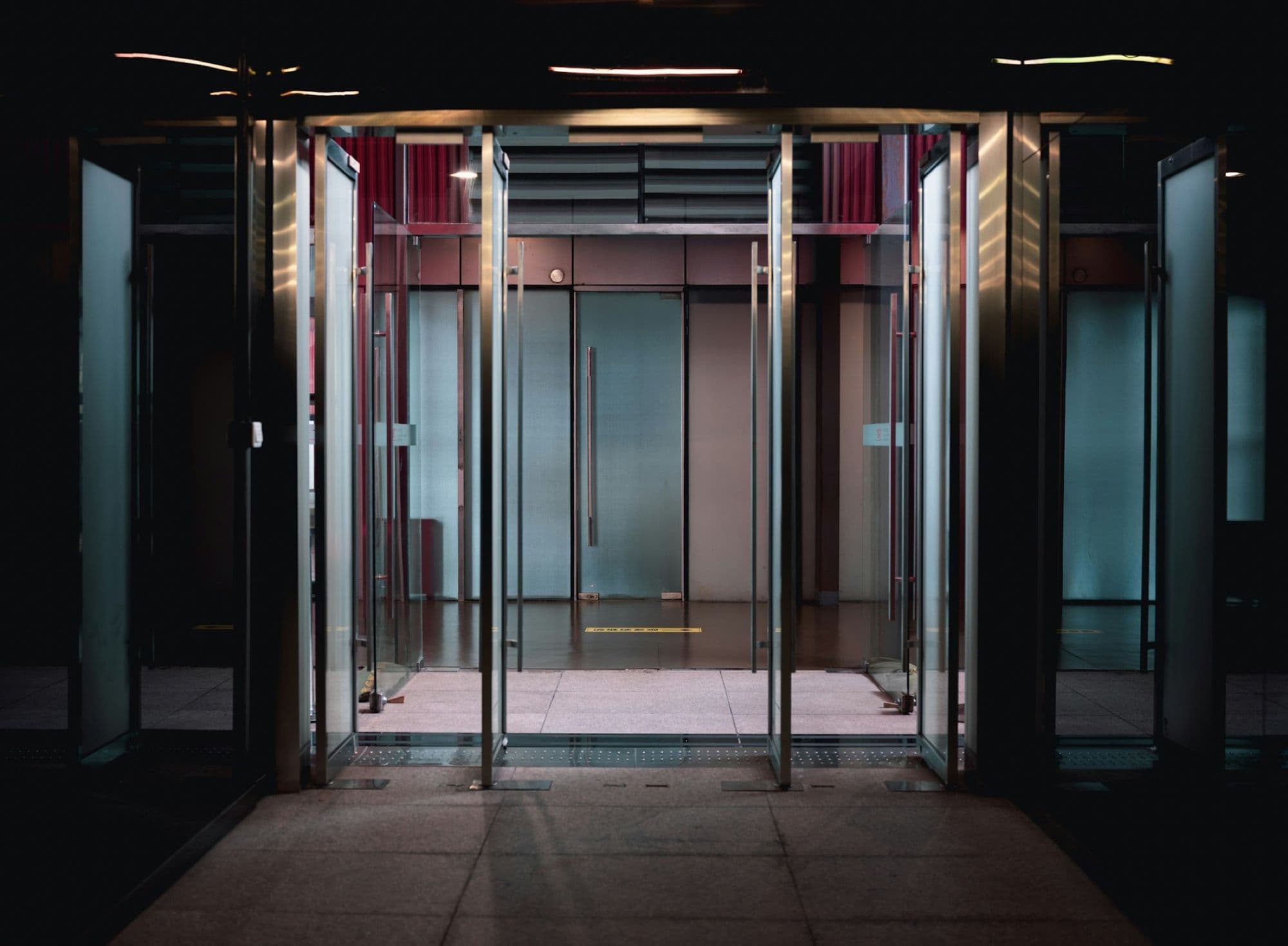
A frameless frontage is sheets of toughened glass held top and bottom in channels, with doors on patch fittings and no vertical frame at all. It is the most open a shop can look. It is also the least forgiving to measure, and the one that needs the most thought about what happens after closing.
How it goes together
Fixed panes stand in a head channel and a floor channel, usually in 12mm toughened glass, with clear silicone at the vertical joints. On tall or wide runs we add glass fins, narrow sheets fixed at right angles behind the joints, to stiffen the plane against wind. The doors clamp into patch fittings and pivot on floor springs, so the only visible hardware is the handle.
Every sheet is toughened after it has been cut, and nothing can be trimmed, drilled or notched afterwards. Holes for the patch fittings, cut-outs for the lock and the overall height are all fixed by the template taken on survey. That is why we template frameless work ourselves instead of working from a builder’s dimensions.
Heat-soaking, and why to ask for it
Toughened glass occasionally breaks with nothing touching it. The usual cause is a microscopic nickel sulphide inclusion that grows slowly over months or years until the sheet lets go. Heat-soak testing holds the toughened sheets at high temperature for several hours before they leave the factory, so the ones that would fail do it in the oven rather than above a pavement.
It adds cost and a few days. On large panes, and on anything overhead, we think it is worth it and will mark on the drawing where we would specify it.
Security after closing
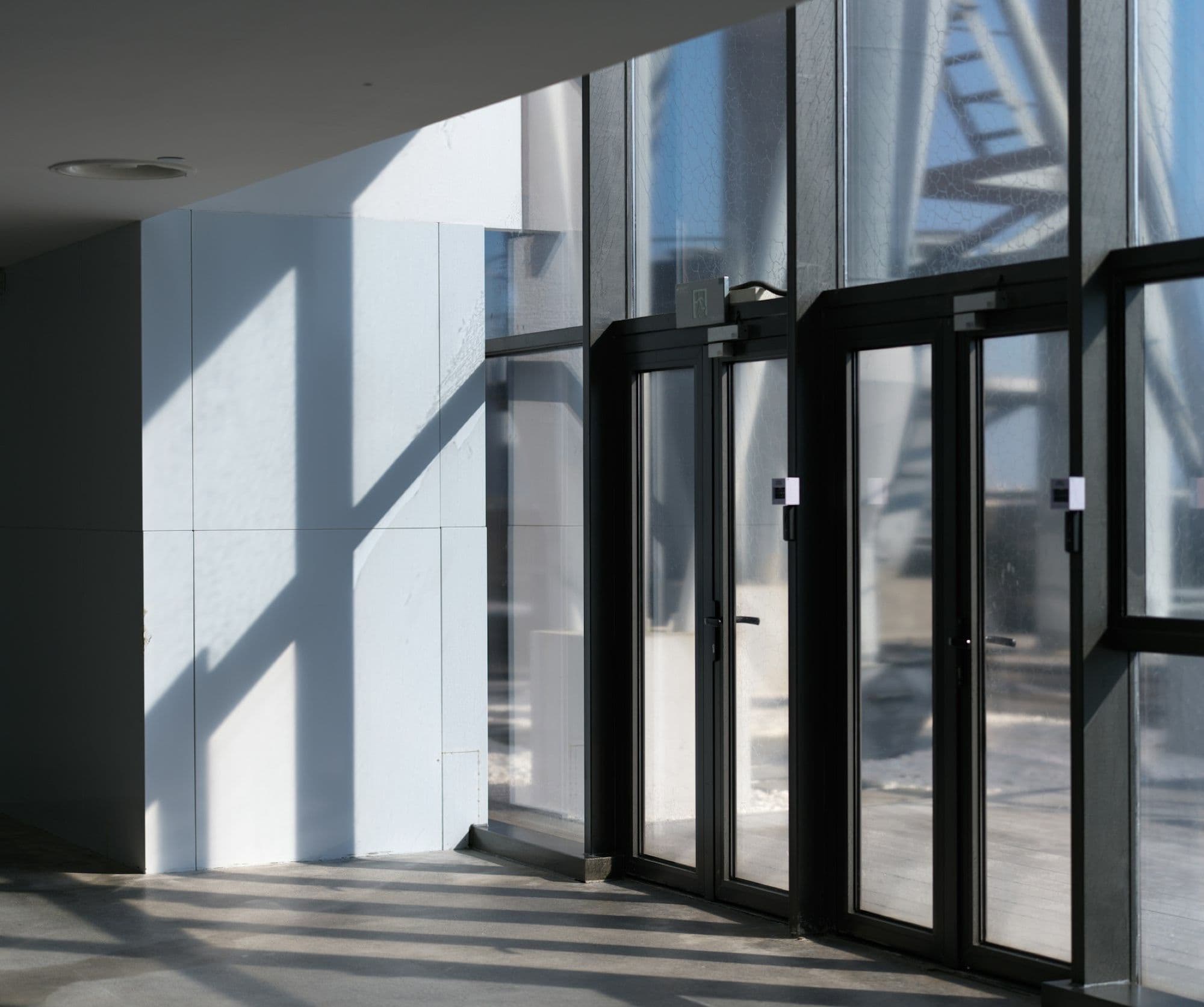
With no frame to take a lock, frameless doors lock at the bottom rail into a keep set in the floor, and sometimes at the top rail as well. That is a sound lock for keeping the weather and the casual visitor out. On its own, it is not protection for high-value stock.
Where a shop holds anything worth a smash-and-grab, we pair the glass with an internal shutter or grille that drops behind it at night. It is invisible during the day and leaves the frontage clean from the street. Laminated toughened glass, which holds together when it breaks, is the other option: heavier, dearer, and a real improvement.
Marking the glass
Floor-to-head clear glass is easy to walk into. The regulations ask for manifestation on large panes in two bands, one between 850 and 1000mm above the floor and one between 1400 and 1600mm. Most shops use the upper band for opening hours or a logo. It is set out on the drawing with everything else.
05
Asked on survey
- Is frameless glass secure?
- It is strong glass, and a bottom-rail lock is a proper lock. It is still glass with no frame, though, and against a planned break-in it depends on what stands behind it. For jewellers, phone shops and pharmacies we would put an internal shutter behind it.
- Can one broken pane be replaced on its own?
- Yes. A single fixed pane or door leaf can be re-templated and replaced. The new sheet is made to measure, so there is a lead time, and the gap is boarded or temporarily glazed until it arrives.
- Will the shop be colder?
- Single-glazed frameless glass loses more heat than a thermally broken framed frontage. Many shops accept that for the look. If the premises is heated all day, an air curtain over the door, or a framed double-glazed frontage, may be the better answer.