Security doors
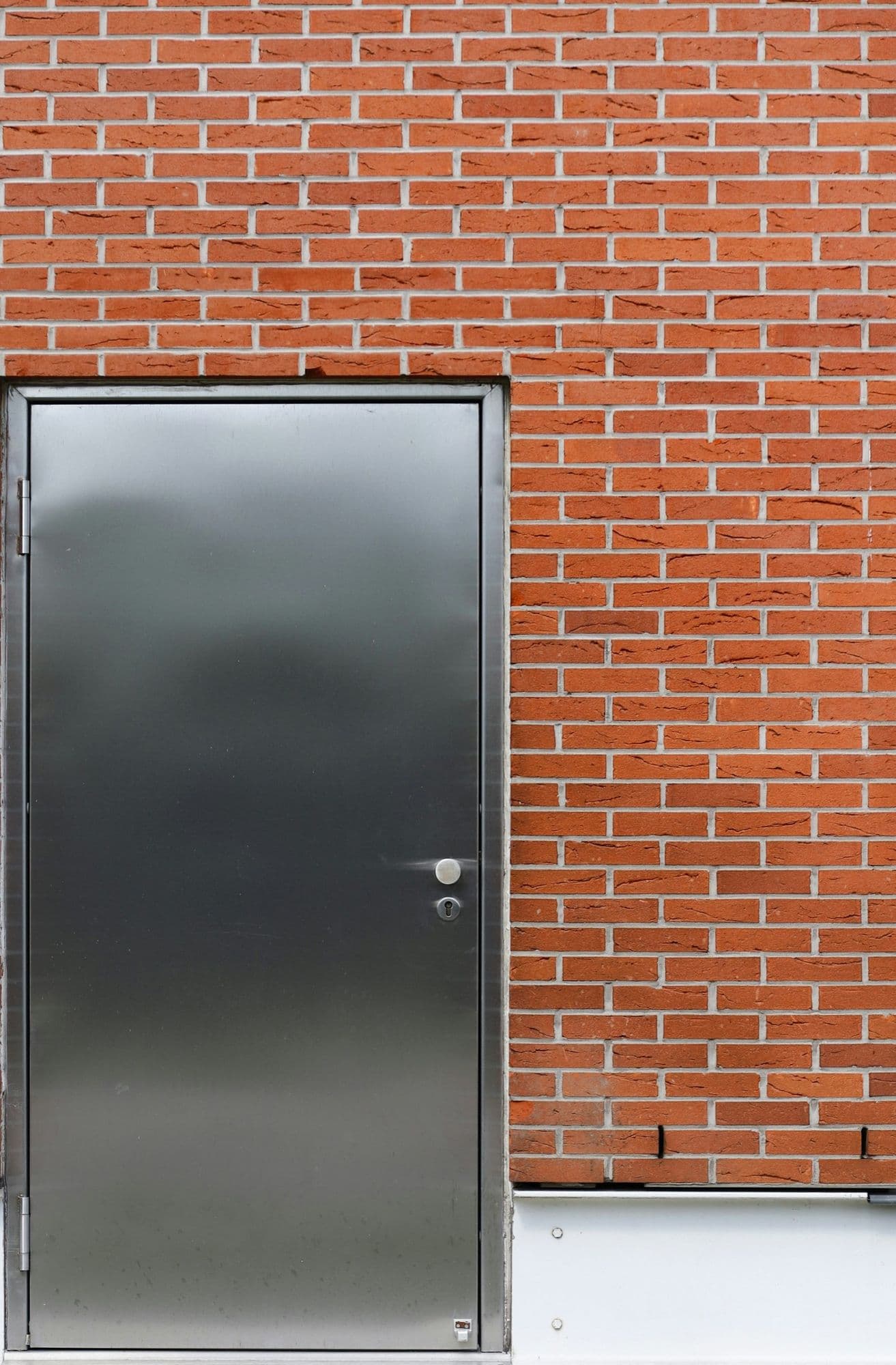
The front of a shop is lit, overlooked and shuttered. The back door is usually none of those things. A familiar pattern after a break-in is a rear or side entrance with a timber door and a padlocked hasp that had been fine for years, until the night it was not.
Door, frame and wall
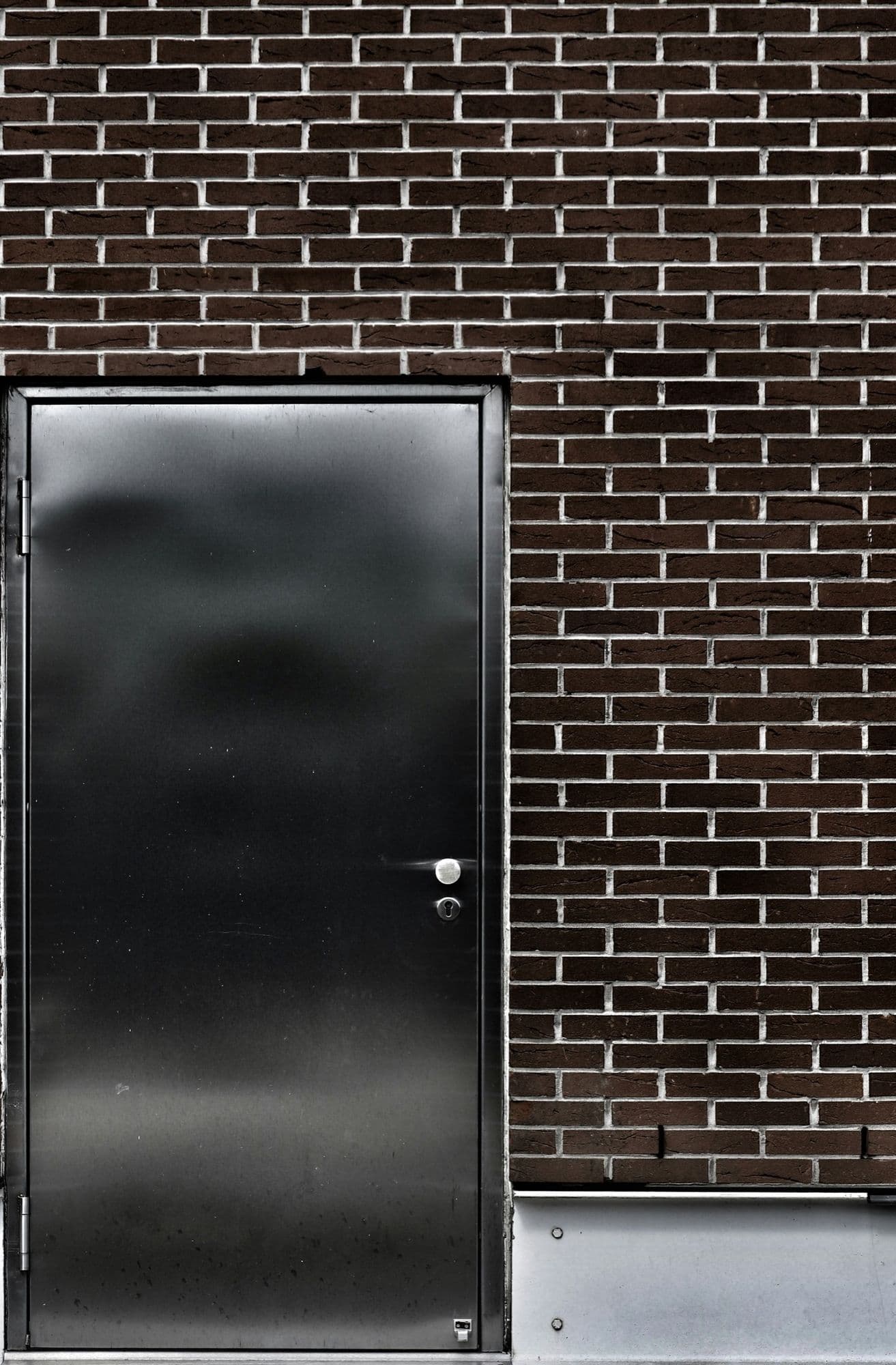
A steel security door is a leaf of steel skins over a stiffened core, hung in a steel frame. The leaf is seldom the weak point. The frame has to be fixed back into the wall at close centres, with the fixings concealed inside the frame so they cannot be cut, and the wall has to be sound enough to hold them. On rendered blockwork we may recommend a steel subframe, or fixings through into the lintel.
Hinges give the other clue. On an outward-opening door the hinge pins are on the outside, so a good door carries hinge bolts: steel dogs on the hinge edge that engage the frame when the door shuts. Cut the hinges off and the door still does not move.
Locking, and getting out
Multi-point locking throws bolts into the frame at the top, middle and bottom, so the door cannot be levered at one corner. The cylinder should be anti-snap, and a key-registered cylinder means copies cannot be cut at the nearest kiosk.
Many rear doors are also the fire exit, and that changes the brief. The door must open from the inside, without a key, in one movement. We fit a panic bar where members of the public might use the exit, and push-pad escape hardware where only trained staff will. Both work with multi-point locking, so security and escape do not have to be traded against each other.
Where they go
Rear and side entrances to shops. Stock rooms and cash offices inside the building. Plant rooms and meter cupboards, where the door needs ventilation: security louvres, built so they cannot be pushed in or reached through. Street doors to flats above shops, which are shared, slammed and rarely looked after.
Certification
Doors tested to LPS 1175 or STS 202 have been through a defined attack test, in the same way as a rated shutter. If your insurer names one, we supply to it. If not, a well-made steel door with hinge bolts, multi-point locking and a properly fixed frame is still a very large step up from timber and a padlock.
05
Asked on survey
- Will it fit my existing opening?
- Usually. The frame is made to the opening we measure, so a standard size is not needed. If the lintel or reveals are weak, we will say so and price the making good separately.
- What colour can it be?
- Any RAL colour in powder coat. Most rear doors go in black or grey, or in a colour matched to the building’s other joinery.
- Does a steel door need a closer?
- If it is a fire door, or a door that has to self-close, yes. Otherwise it is optional, but a closer stops a heavy steel leaf slamming or swinging open in the wind.