Aluminium shopfronts

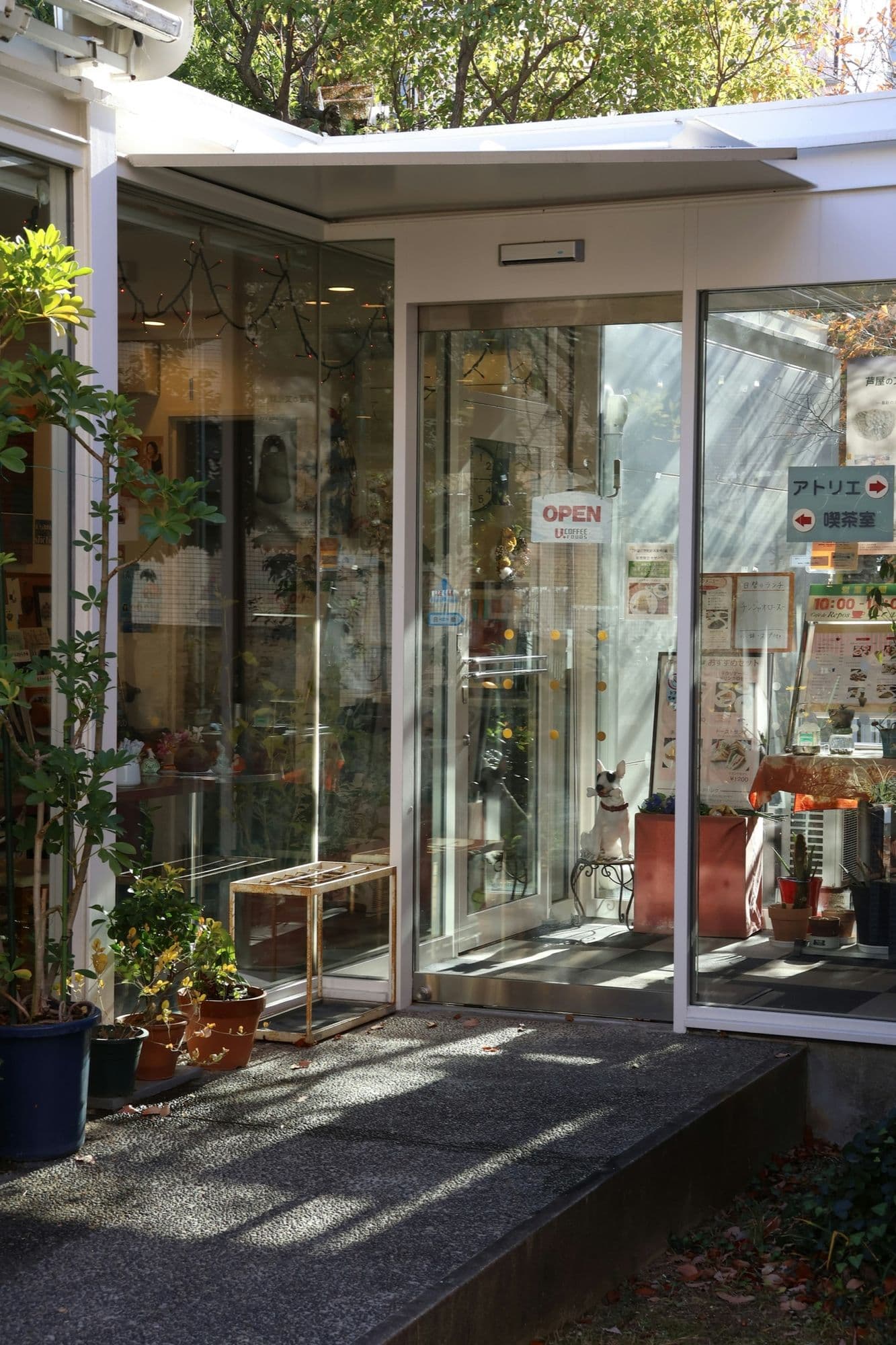
An aluminium shopfront is mostly glass held in a frame, and the frame is the easy part to get right. What decides whether it still works in ten years is the entrance door: how deep its stiles are, what holds it shut, and what it hangs from.
Start with the door
Shopfronts that come to us for replacement have rarely failed at the glass. They have failed at the door: a narrow-stile leaf that has dropped on its hinges, a lock that no longer meets its keep, a closer that slams or will not latch. So the door is specified before anything else on the drawing.
For a shop with steady footfall that normally means a wide-stile door. The vertical members are deep enough to house a hookbolt deadlock and a cylinder that sits flush rather than standing proud to be snapped. Narrow stiles look lighter on paper, and on a quiet boutique they are fine. On a newsagent or a chemist that opens and shuts all day, they are the first thing to go.
How the door hangs matters as much as the leaf. Butt hinges with an overhead closer are the simplest to keep adjusted. A floor spring, with the closer buried in a pit under the threshold, gives a cleaner elevation and a door that holds open at ninety degrees, but it means cutting the slab and setting the spring dead level.
Frame and glass
Frames are box-section aluminium, thermally broken where the shop is heated and the frontage is wide enough for heat loss to show on a bill. The finish is polyester powder coat in any RAL colour. Anodised finishes age beautifully and are worth considering on a listed street, but they add to the lead time.
Glass is chosen for the risk, not the look. Anything in a door, or low enough to walk into, has to be safety glass. For display windows we usually put laminated glass on the outer face. Toughened glass is strong, but when it does break it drops out in fragments and leaves the shop open to the street. Laminated glass cracks and stays in the frame, which buys time to board or reglaze.
Large clear panes also need manifestation, the etched band or lettering that stops people walking into them. It is set out on the drawing at the heights the regulations call for, not added with a tape measure on opening day.
Planning, access and the stall riser
Changing the appearance of a shopfront normally needs planning permission, and in a conservation area the council will have a view on the frame colour, the fascia depth and the glazing pattern. We draw the elevation to scale early so it can support an application, and we would rather say a design is likely to be refused than let you find out after paying for it.
A new entrance should have a level threshold, a clear opening wide enough for a wheelchair, and a door that opens without a shoulder behind it. Where the pavement falls across the frontage, a ramped approach inside the line of the glass is usually better than a step.
Below the glass, the stall riser takes kicks, mop buckets and trolley wheels. It goes in as solid aluminium panel, or in brick or tile to match the building, never as thin cladding that dents in its first week.
How the fit goes
We measure the opening ourselves, draw the frontage, and order nothing until you have signed that drawing. On the fitting day the old frontage comes out and the new one goes in, and the aim is always the same: the premises lockable again by the evening. Trims, sealing and adjustment follow the next day where they need to.
05
Asked on survey
- Can a new shopfront go in behind my existing shutter?
- Usually, provided the shutter guides are fixed to the masonry and not to the old frame. We check this on survey. If the guides would come away with the old frontage, refixing them is priced in from the start.
- Will I need planning permission?
- If the appearance changes, probably. Like-for-like replacement sometimes does not, but that is the local authority’s decision. On a listed building or in a conservation area, assume you will. We supply the scaled drawings an application needs.
- How long will the shop be closed?
- Normally only for the fitting day. Removal is planned so the premises can be locked or boarded by nightfall, with finishing work the following morning if needed.